


Plenary Speaker

Prof. Sir David Panye
Fellow of the Royal Society, the Royal Academy of Engineering, the Indian Academy of Engineering, the Russian, Indian and Norwegian Academy of Sciences, the IET (UK)Biography: Prof D. N. Payne is an internationally distinguished research pioneer in photonics, having been in the field for over 50 years. Optical fibre technology is one of the greatest scientific successes of the last three decades and Payne’s contributions are acknowledged as seminal in many areas. Optical fibres underpin the internet, provide new laser capability and environmental sensing, and drive growth to the benefit of all nations.
Payne’s work spans many diverse areas of photonics, from telecommunications and optical sensors to nanophotonics and optical materials. As others have noted, with his colleagues he has made many of the key technical achievements in almost every area of optical fibre technologies and his work has had a direct impact on worldwide telecommunications, as well as nearly all fields of optical R&D. As a result, he is the most highly honoured UK scientist in photonics.
David’s pioneering work in fibre fabrication in the 70’s resulted in almost all the special fibres in use today. He led the team that in 1985 first announced the silica fibre laser and the Erbium-Doped Optical Amplifier (EDFA), the device that fuelled an explosive growth in the internet through its ability to transmit and amplify vast amounts of data. The EDFA is widely regarded as being one of the foremost and most significant developments in modern telecommunications.
David is widely regarded as a charismatic and influential speaker, with extensive international experience. He is known throughout the world and is much in demand as a Plenary Speaker for his insight in a diverse range of scientific topics.
He has published over 650 Conference and Journal papers and been awarded the top American, European and Japanese prizes in photonics, a rare achievement.
As well as the UK Rank Prize for Optics and the prestigious US Tyndall Award, he is a Franklin Laureate (USA), an Eduard Rhein Laureate (Europe) and a Millennium Prize Laureate. He is also an original member of the Highly Cited Researchers (USA) where he is honoured as one of the most referenced, influential researchers in the field and a Thomson REUTERS Citation Laureate.
In 2013, he was Knighted for services to photonics in the Queen’s New Year’s Honours and in 2018 with his colleagues won the Queen's Anniversary Prize that celebrates excellence, innovation and public benefit in work carried out by UK universities.
Keynote Speakers
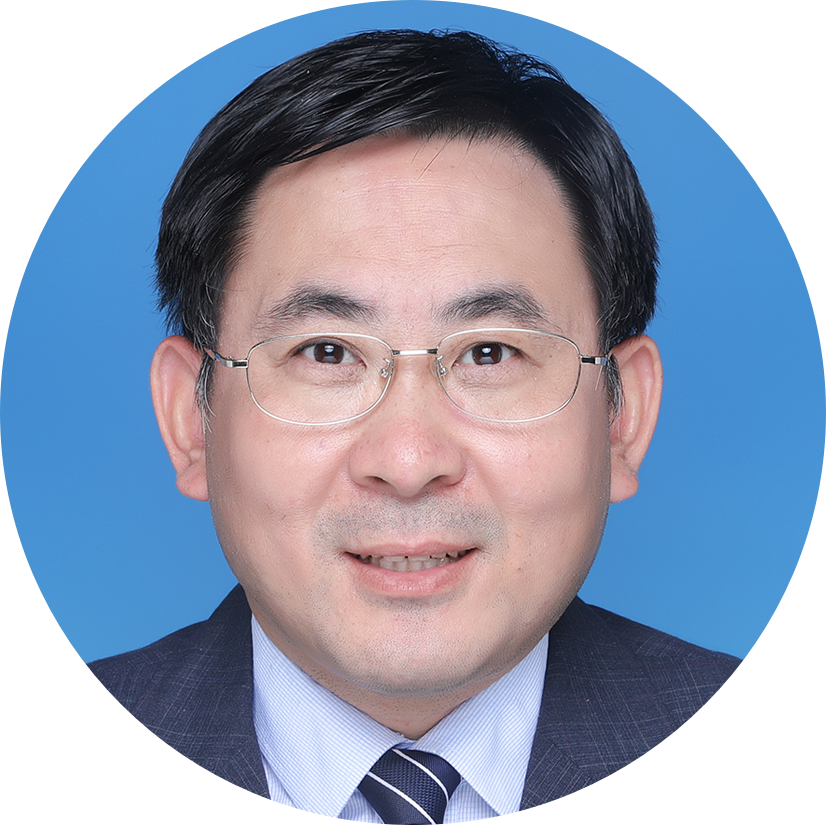
Prof. Xingjun Wang
Fellow of the Optical Society of America (OSA), Fellow of the China Institute of Communications (CIC), Fellow of the Chinese Society for Optical Engineering (CSOE)Biography: Xingjun Wang, Boya Distinguished Professor at Peking University, Cheung Kong Scholar Distinguished Professor under the Ministry of Education, PhD advisor, the Associate Dean of the School of Electronics, the Head of a National Key Field Innovation Team, the Deputy Director of the National Key Laboratory of Photonic Transmission and Communications, the Deputy Director of the Ministry of Education’s Frontier Science Center for Nano-Optoelectronics, and a member of the Academic Degrees Appraisal Committee of the State Council. He is also a Fellow of the Optical Society of America (OSA), a Fellow of the China Institute of Communications (CIC), and a Fellow of the Chinese Society for Optical Engineering (CSOE).
Over the past five years, his work has primarily focused on optoelectronic integrated chips and systems. As the principal investigator, he has led several major research projects, including two National Key R&D Programs, two National Major Engineering Projects, a Major Scientific Instrument Project of the National Natural Science Foundation of China (NSFC), two NSFC Key Projects, and a Beijing Municipal Key Project. His representative achievements have been recognized with numerous awards, including China’s Top 10 Scientific and Technological Innovations Award, China’s Top 10 Advances in Information and Communication Technology (twice), China’s Top 10 Optical Advances, China’s Top 10 Social Impact Events in Optics (twice), and China’s Top 10 Advances in Chip Science. He also received the 2024 Beijing Natural Science Award First Prize (ranked first).
His long-term research focuses on silicon-based optoelectronic integrated chips and information systems. As the first or corresponding author, he has published over 200 papers in high-impact journals such as *Nature* (2 papers), *Nature Photonics*, and *Nature Communications* (8 papers). He holds more than 50 authorized invention patents.

Prof. Caiming Qiu
Fellow of the IEEEBiography: Robert Caiming Qiu (Fellow, IEEE) received the Ph.D. degree in electrical engineering from New York University (formerly Polytechnic University), Brooklyn, NY, USA. He joined the School of Electronic Information and Communications, Huazhong University of Science and Technology, China, as a Full Professor, in 2020. Before joining HUST, he was an Associate Professor with the Department of Electrical and Computer Engineering, Center for Manufacturing Research, Tennessee Tech University, Cookeville, TN, USA, in 2003, where he became a Professor in 2008. He founded and served as the CEO and the President of Wiscom Technologies Inc., a company specializing in manufacturing and marketing WCDMA chipsets. In 2003, he was acquired by Intel. He was with GTE Laboratories Inc. (now Verizon), Waltham, MA, USA; and Bell Laboratories, Lucent, Whippany, NJ, USA. He has co-authored Cognitive Radio Communication and Networking: Principles and Practice (John Wiley, 2012) and Cognitive Networked Sensing: A Big Data Way (Springer, 2013) and authored Big Data and Smart Grid (John Wiley, 2015). He has authored over 100 journal articles/book chapters and 120 conference papers. He has served as a TPC Member for GLOBECOM, ICC, WCNC, and MILCOM. He was a Guest Book Editor of Ultra-Wideband (UWB) Wireless Communications (New York: Wiley, 2005) and three Special Issues on UWB, including IEEE Journal on Selected Areas in Communications, IEEE Transactions on Vehicular Technology, and IEEE Transactions on Smart Grid. Furthermore, he has made 15 contributions to 3GPP and IEEE standards bodies. He has also served as an Associate Editor for IEEE Transactions on Vehicular Technology and other international journals.
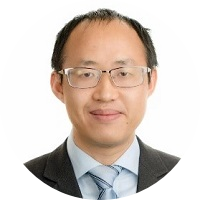
Prof. Yong Zeng
Fellow of the IEEEBiography: Yong Zeng, IEEE Fellow, Young Chief Professor of Southeast University and Purple Mountain Laboratory, Nanjing, China. He received the Bachelor of Engineering (First-Class Honours) and Ph.D. degrees from Nanyang Technological University (NTU), Singapore. From 2013 to 2018, he was a Research Fellow and Senior Research Fellow at the National University of Singapore (NUS). From 2018 to 2019, he was a Lecturer at the University of Sydney, Australia.
Prof. Zeng was listed as Clarivate Analytics Highly Cited Researcher for 7 consecutive years (2019-2025), AI2000 Most Influential Scholars in the field of Internet of Things for 4 consecutive years (2021-2024), Stanford "Top 2% of Scientists in the World - Lifetime Influence". Prof. Zeng is the recipient of Australia Research Council (ARC) Discovery Early Career Researcher Award (DECRA), IEEE Communications Society Asia-Pacific Outstanding Young Researcher Award, and won 10 international and domestic best paper awards including IEEE Marconi Award (2020 and 2024), Heinrich Hertz Award (2017 and 2020), etc. Prof. Zeng proposed the concept of channel knowledge map (CKM), and his works have been cited by more than 40,000 times. He serves on the editorial board of SCI journals such as IEEE Transactions on Communications, IEEE Transactions on Mobile Computing, and IEEE Communications Letters, and leading guest editor of journals including IEEE ComMag, Wireless ComMag, China Communications, and Science China Information Sciences. Prof. Zeng was elevated to IEEE Fellow “for contributions to unmanned aerial vehicle communications and wireless power transfer”.